Black rhino baby
Another important birth for the zoo with the arrival of our second critically endangered eastern black rhino calf!
Our team are celebrating the birth of another critically endangered eastern black rhino calf – and it’s a boy! What a fantastic early Christmas pressie for the zoo team!
This is the second rhino calf to be born at the park, and the second in Wales as part of a managed breeding programme for the endangered species, through our membership with EAZA.
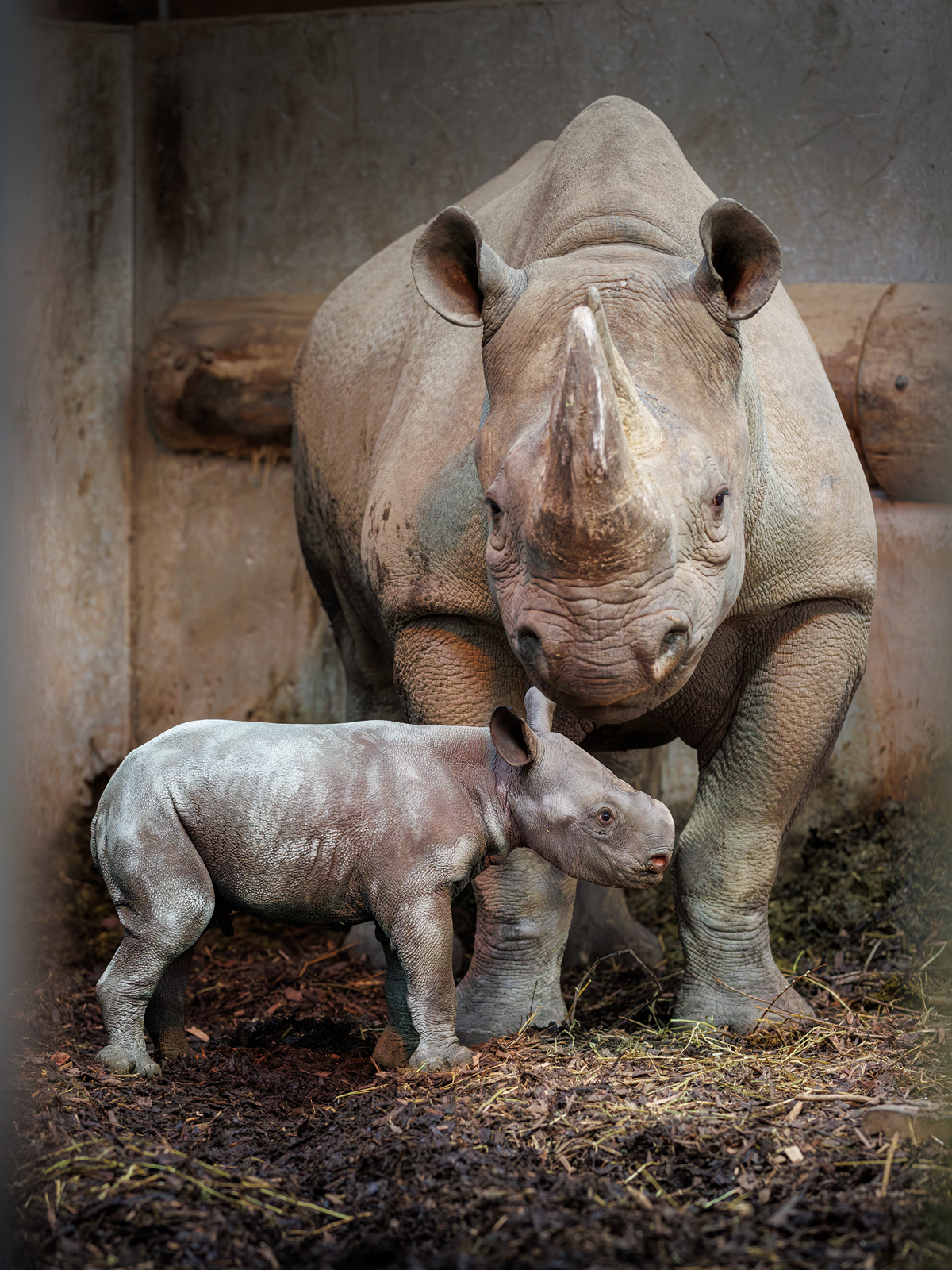
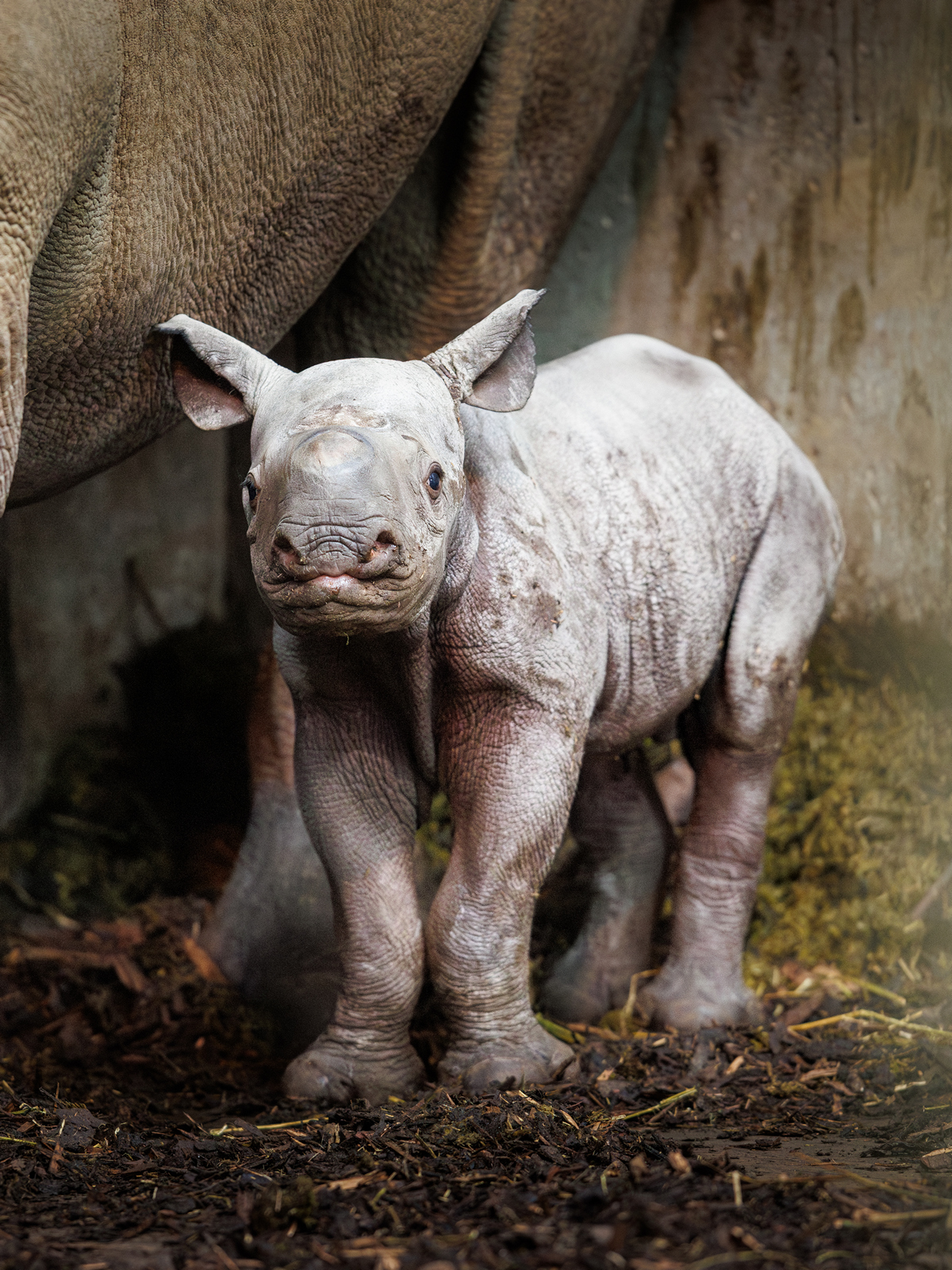
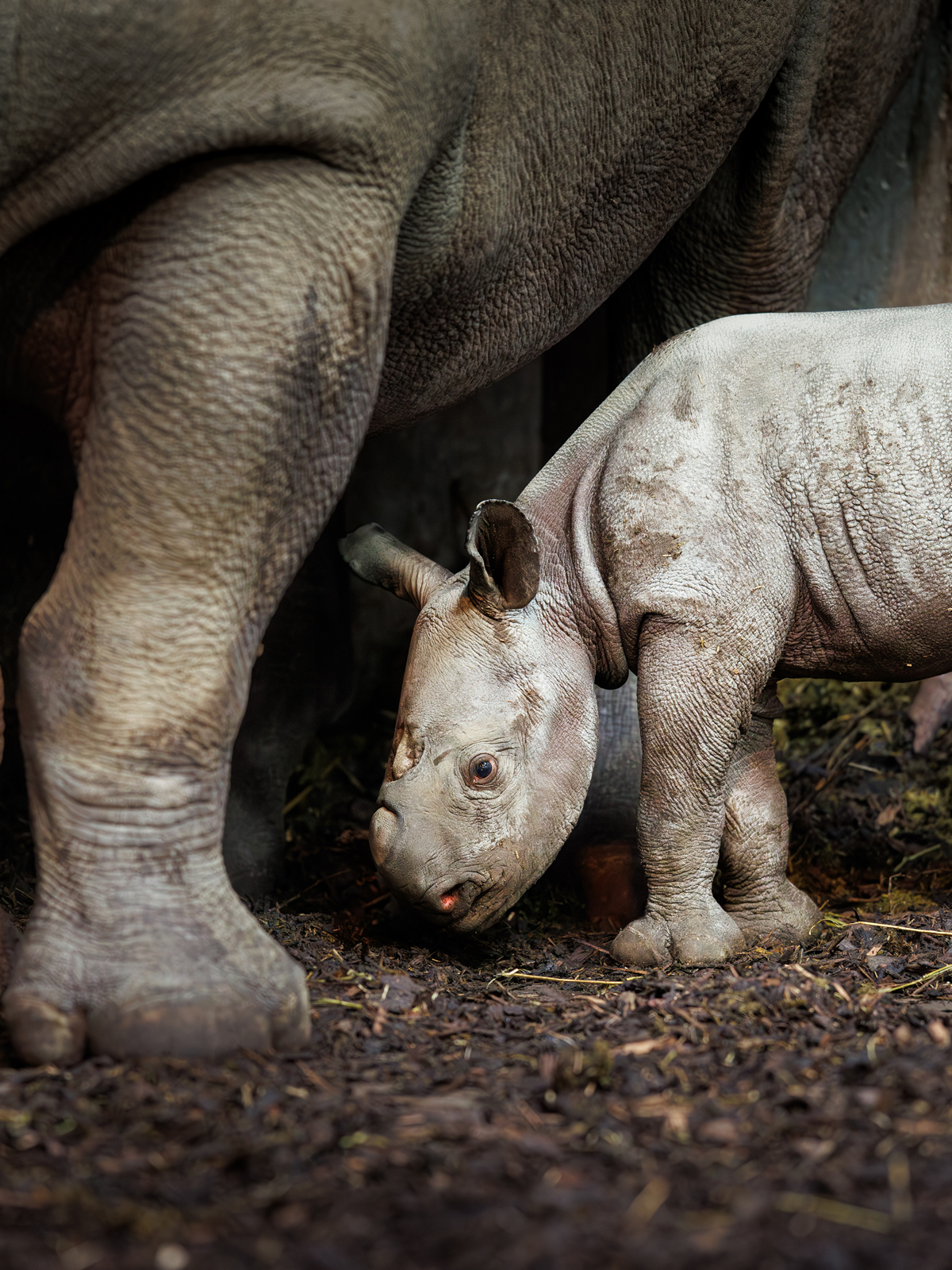
After a 15-month long pregnancy, mum Dakima gave birth to a healthy male calf on Thursday 27 November. With only an estimated 39 eastern black rhinos born in the UK in the past 25 years, it’s a significant achievement for the captive European Endangered Breeding Programme (EEP) for black rhinos.
Eastern black rhinos are classed as critically endangered due to poaching and loss of habitat. There’s thought to be an estimated 1471 Eastern black rhino left in the wild and around 109 in zoos across Europe, including our newest addition. The calf made its appearance at 6.34am and within a couple of hours was standing up, following mum around the enclosure and had started suckling. All great signs!
Our 12-year-old breeding female, Dakima, arrived at the zoo in 2017 as part of a European breeding programme and met her mate, 14 year-old male Nkosi. Dakima gave birth to her first calf, Glyndŵr, at the start of 2020 – her first born and the first rhino calf to have been born in Wales. Glyndŵr was named after our Founding Director, the late Glyndŵr Williams, and has since moved onto another animal collection to continue the breeding programme for the species.
Eastern black rhinos are solitary animals and usually reside in their own paddocks. But when the time was right, Dakima and Nkosi were reintroduced again for some carefully planned ‘date nights’ – and keepers predicted she fell pregnant sometime in August 2024. After having Dakima’s stool sample analysed at a specialist lab in Chester Zoo, who run the breeding programme for Eastern black rhino, it was confirmed that baby number two was on the way, with a due date of mid-November 2025.
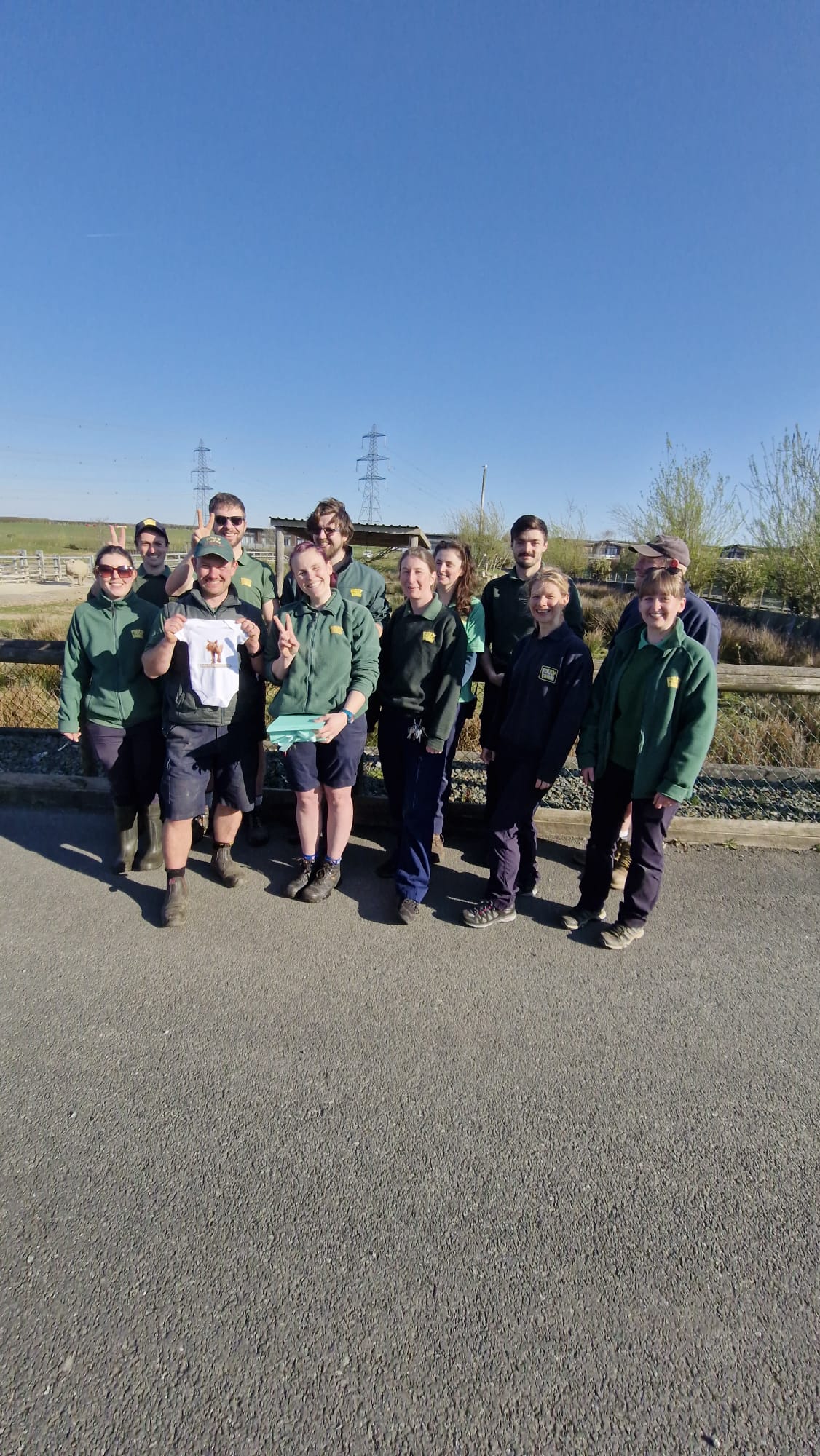
“It’s always heart-warming to welcome new arrivals as part of the European Breeding Programme through our membership with EAZA
Jack, conservation officer
(The European Association of Zoos and Aquaria), but it’s even more special when it’s such a significant animal and one who’s wild cousins are under threat.
Dakima was a great mum with Glyn, so it’s wonderful to see these instincts are still just as strong the second time around.
She’s being very protective of her new baby, showing they have a strong bond already.”
This is such a monumental event for all the staff and zoo team have worked incredibly hard to create an environment where the rhino feel comfortable enough to mate. Not only is this calf helping to increase numbers of a critically endangered species, he’s also the second rhino ever to be born in Wales – something we’re extremely proud of!
Along with other zoos across Europe, we’re part of a breeding programme to help increase the numbers of Eastern black rhino in captivity and, ultimately, the wild. We support a number of conservation projects alongside various animal charities – including our new partnership with ‘Helping Rhinos’, a UK based organisation who, amongst various other conservation initiatives, support a rhino orphanage in South Africa, caring for young calves who have become victims of the poaching crisis.
“We’re absolutely delighted to welcome news of this beautiful eastern black rhino calf at Folly Farm.
simon jones, ceo, helping rhinos
We are grateful for their support of Helping Rhinos’ efforts including the care of young calves orphaned by poaching.”
Most animals give birth at night under the cover of darkness – but Dakima gave birth early in the morning, just before the keepers arrived to start their day. Our rhino keeper opened up the rhino house on Thursday morning and the first thing he saw was the security camera footage, where a tiny new born rhino was seen happily padding about the enclosure. After quietly taking a sneaky peak at the beautiful new calf to confirm what he had seen – he let the team know the happy news that baby had arrived!
“Keepers left Dakima alone with her new bundle of joy, giving them both some space to bond – but continued to monitor them on the cameras
jack, conservation officer
and did regular spot checks to ensure baby was starting to feed. For us, the next steps are just to keep an eye on Dakima and make sure the calf stays
healthy and gets everything he needs from mum. Our goal is always to let nature take its course and interfere as little as possible.”
Dad Nkosi will be a bit of an absent father, but that’s perfectly normal as male rhinos don’t have anything to do with their offspring in the wild. It’s unlikely the team will introduce him to the calf for some time.
“In the wild, rhino calves can stay with their mums for up to four years, after that there’s a possibility this new addition could one day be released into the wild
jack, conservation officer
to help boost population numbers – or move to another zoo to continue the breeding programme in Europe just like his brother.
It’s exciting to be playing our part in helping to safeguard these amazing animals for future generations.”
Our rhino keepers will monitor mum and baby closely over the coming weeks and they will be back out in the enclosure in due course. Please note that visitors shouldn’t expect to see the calf for a while but we’ll of course be posting updates on our social media channels.
Can you believe we welcomed rhinos to the park ten years ago almost to the day?!