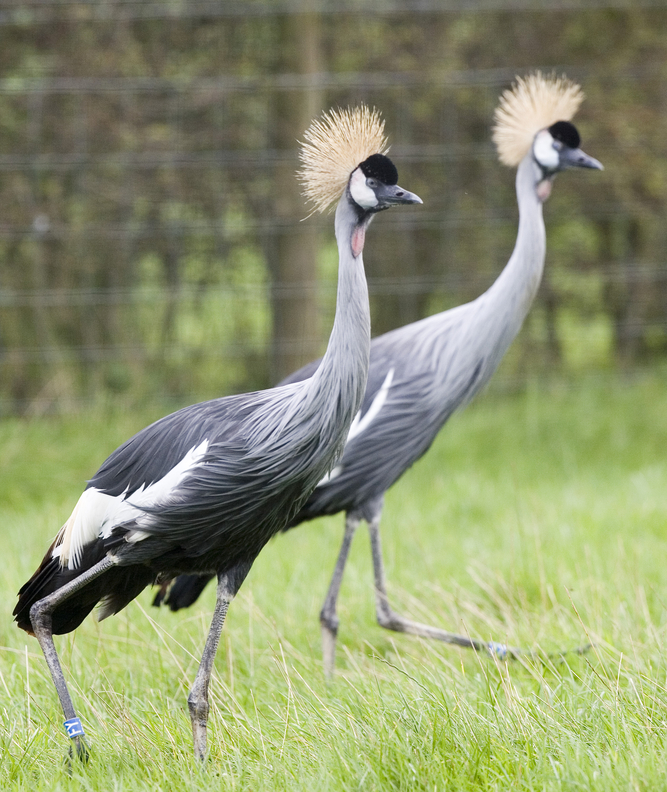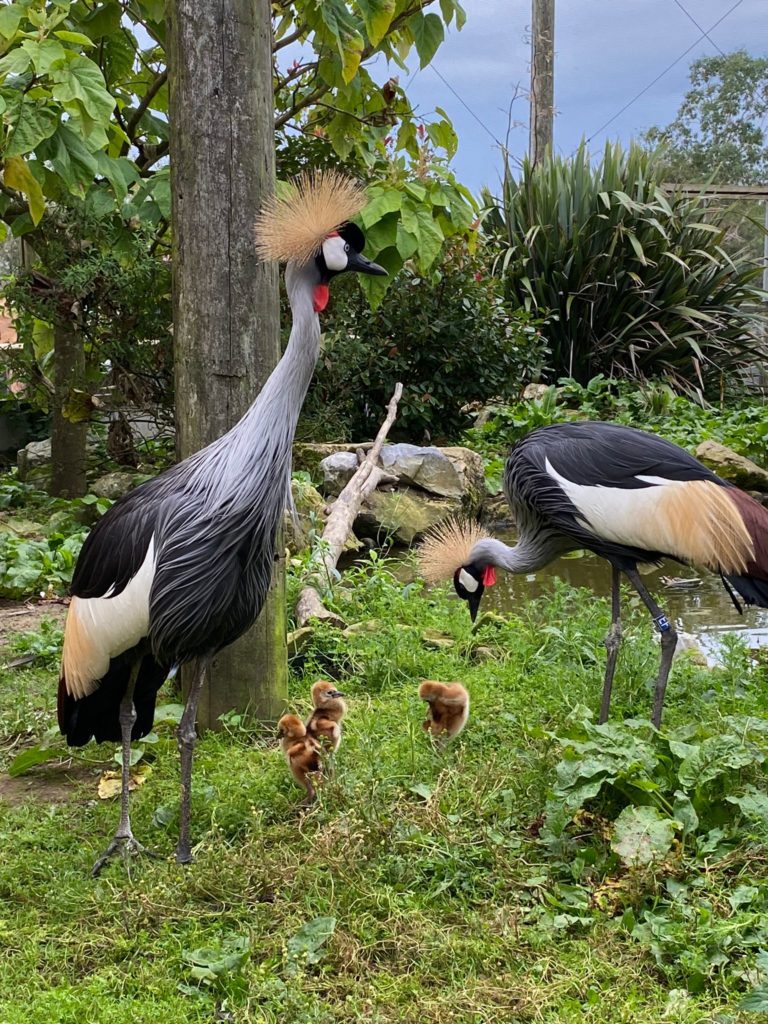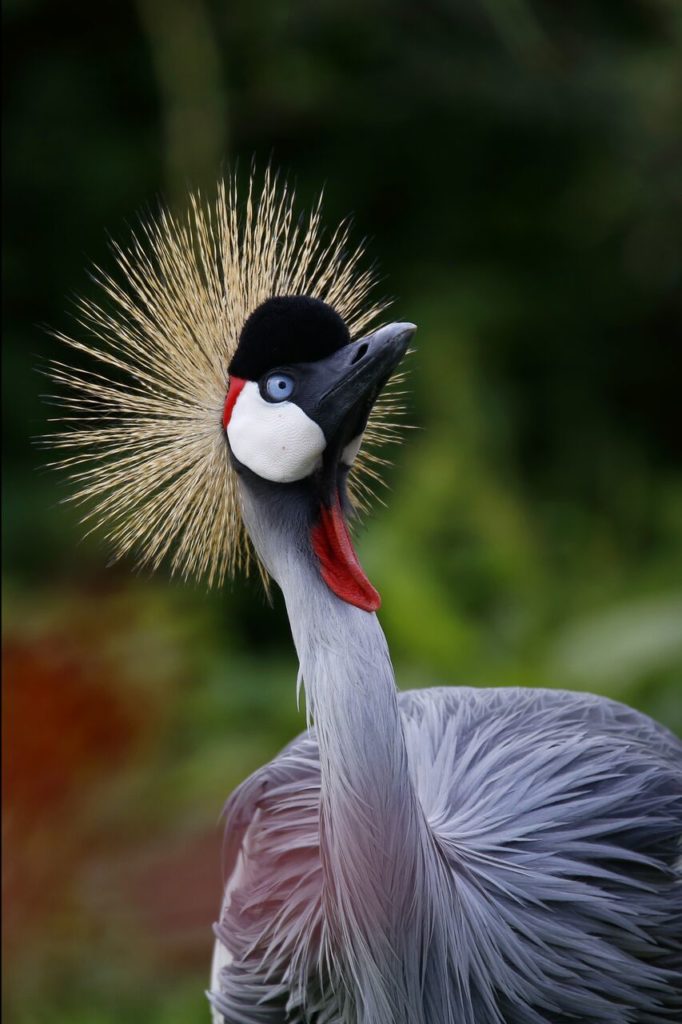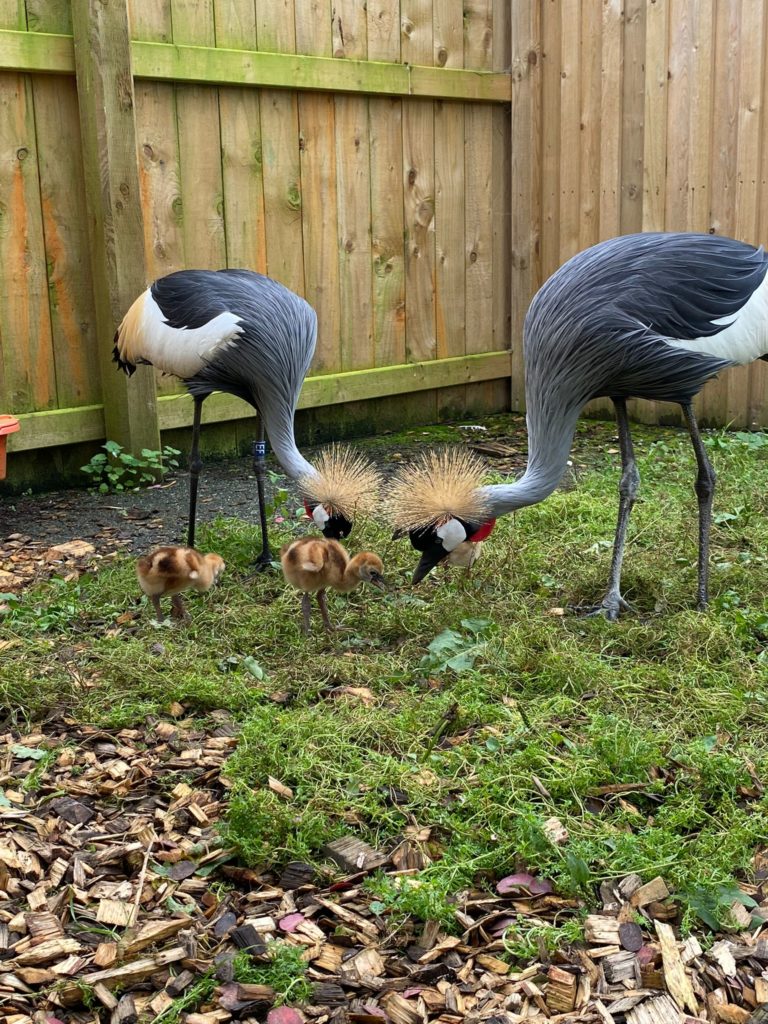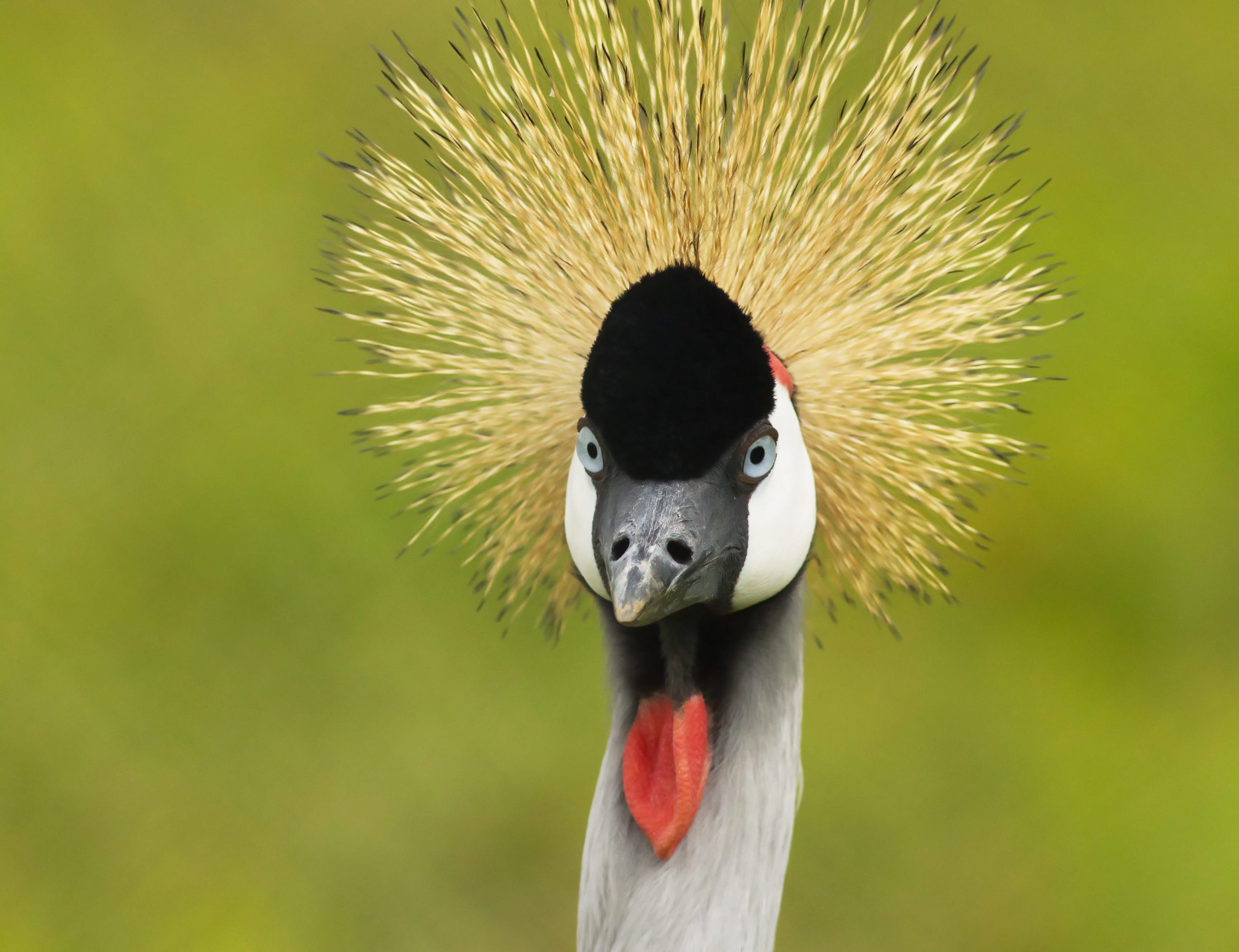
Found in the grassland and wetland areas of the eastern and southern regions of Africa and standing at over a metre tall, there’s no mistaking these giants of the bird world.
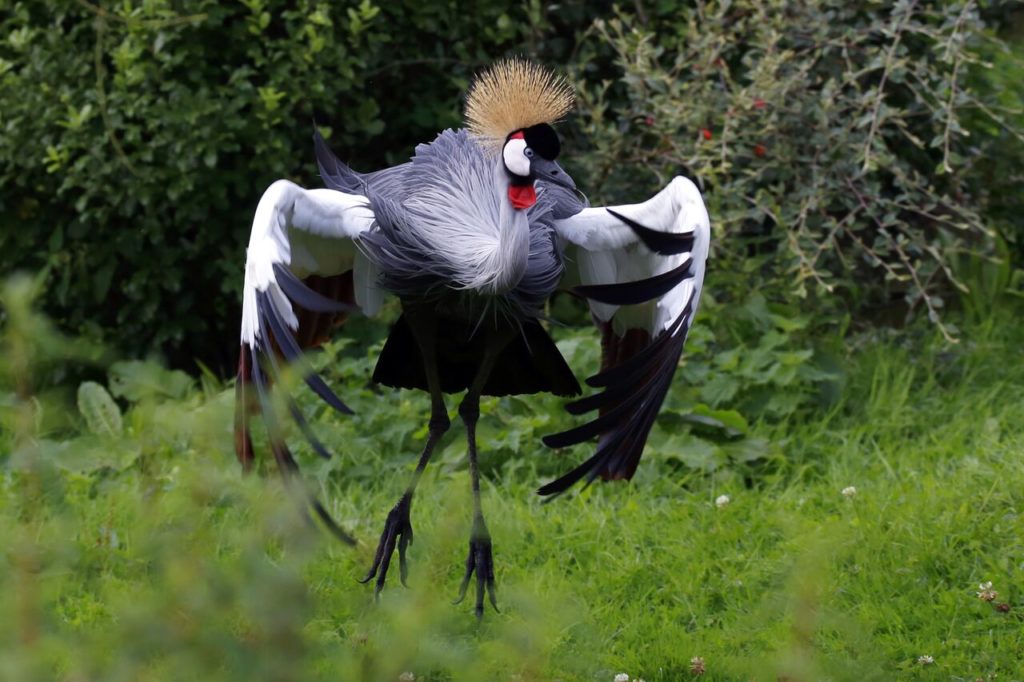
They really do. It’s a breeding display and they like to ‘throw shapes’ in order to attract a mate. Can you dance like a crane? Well, if you can move your feet, bow and jump then you’ve got the basic crowned crane dance steps!
Grey crowned cranes like to share their parental duties. Both the male and the female help to build the nest. They both help out with incubating the egg and also caring for the young.
The grey crowned crane is listed as endangered on the IUCN Red List. It’s protected by law in South Africa, Zimbabwe, Uganda and Kenya. There are also many conservation efforts in place to ensure the survival of the species. The two main threats to the cranes are habitat loss and capture for the pet trade. Crowned cranes thrive in wetlands, feeding on the abundance of insects, amphibians and reptiles that inhabit these areas. This vital habitat is being lost at an alarming rate as wetlands are drained to make way for agriculture.
The beauty of these cranes also works against them, with many vulnerable chicks being captured from the nest for the pet trade. Thought to be a symbol of good fortune, many have their legs tied to a tether on lawns of private homes or hotels.
Although protected by law, many are unaware of this and therefore community-based education is essential for their conservation. There are projects in Kenya, Zimbabwe and Uganda which undertake community-based wetland conservation, providing people with ecotourism employment opportunities. Rwanda has recently registered hundreds of captive cranes, many of which were able to be rehabilitated and returned to the wild.
Latin name
Balearica regulorum
Class
Aves
Order
Gruiformes
Family
Gruidae
Conservation status
Endangered
Impress your friends with everything you know about the Grey crowned crane!
They’re omnivores, so that means they can eat both plants and animals. Their diet usually consists of plants, grain, insects, snakes and small fish.
Usually between two and five.
Big. They have a wingspan of up to two metres.
As much as they can…they actually spend their entire day foraging for food.