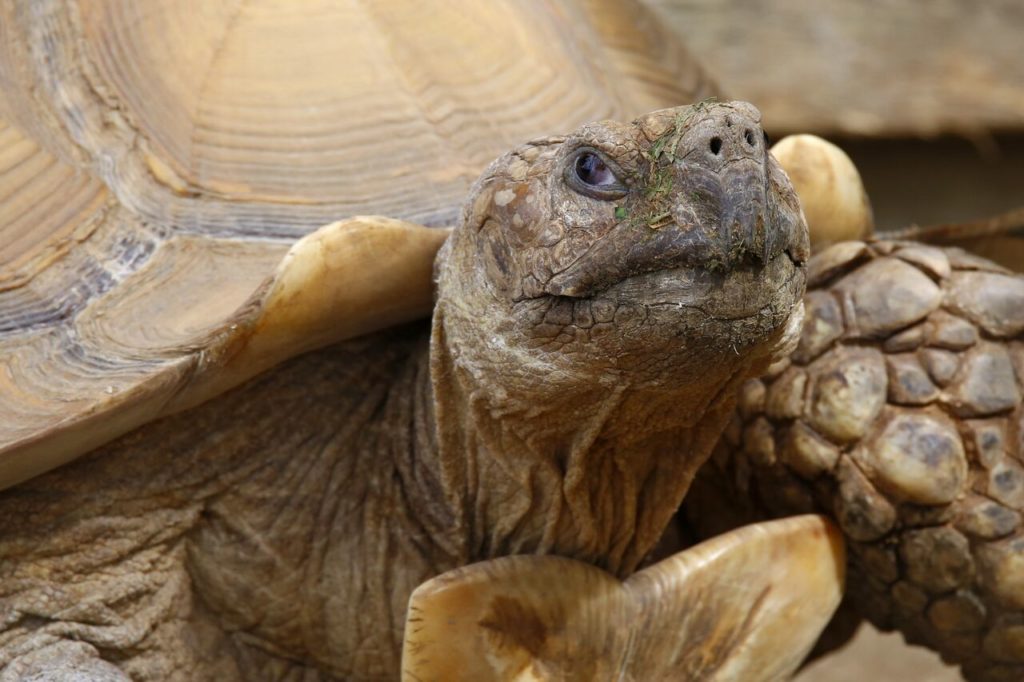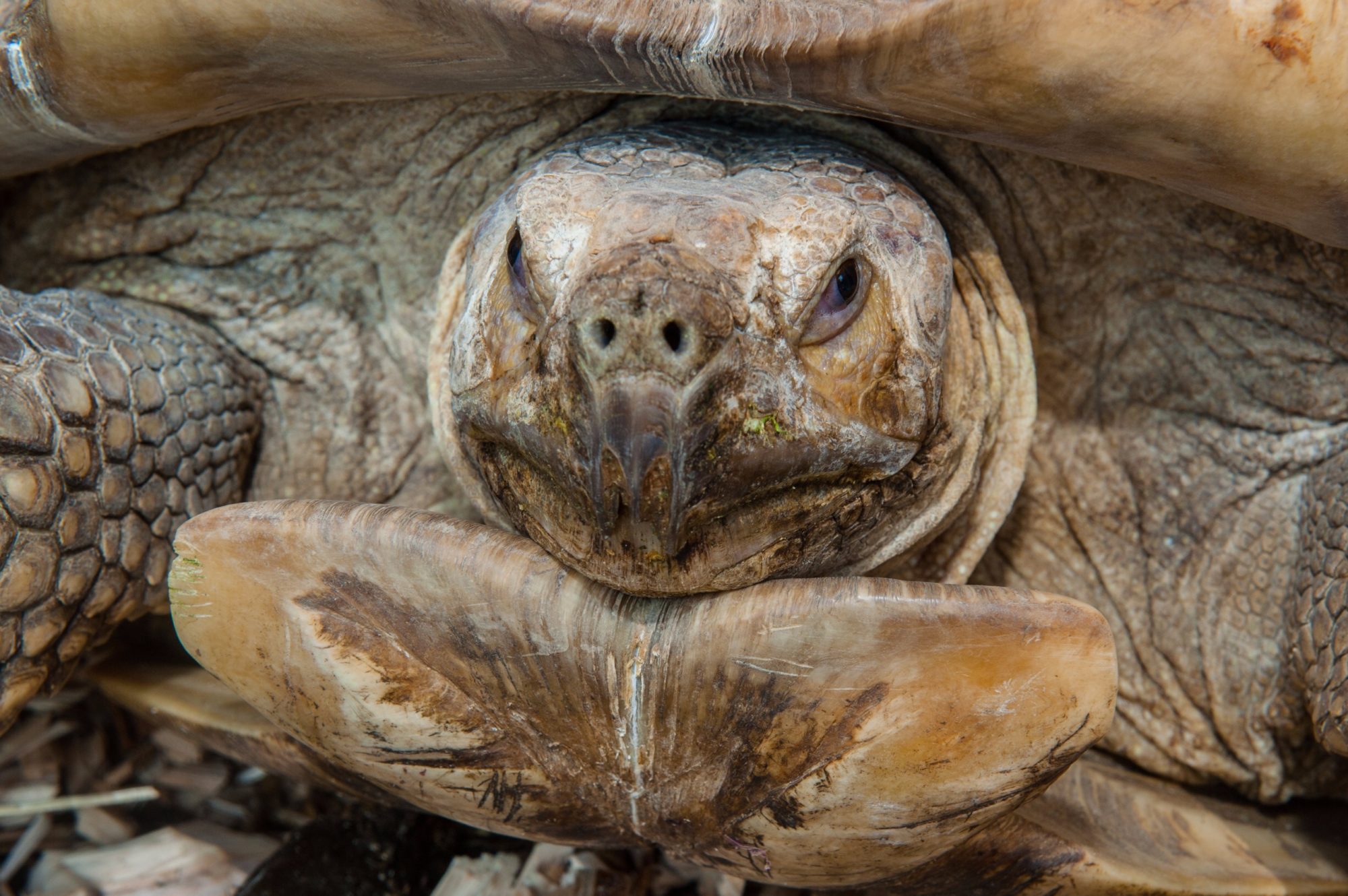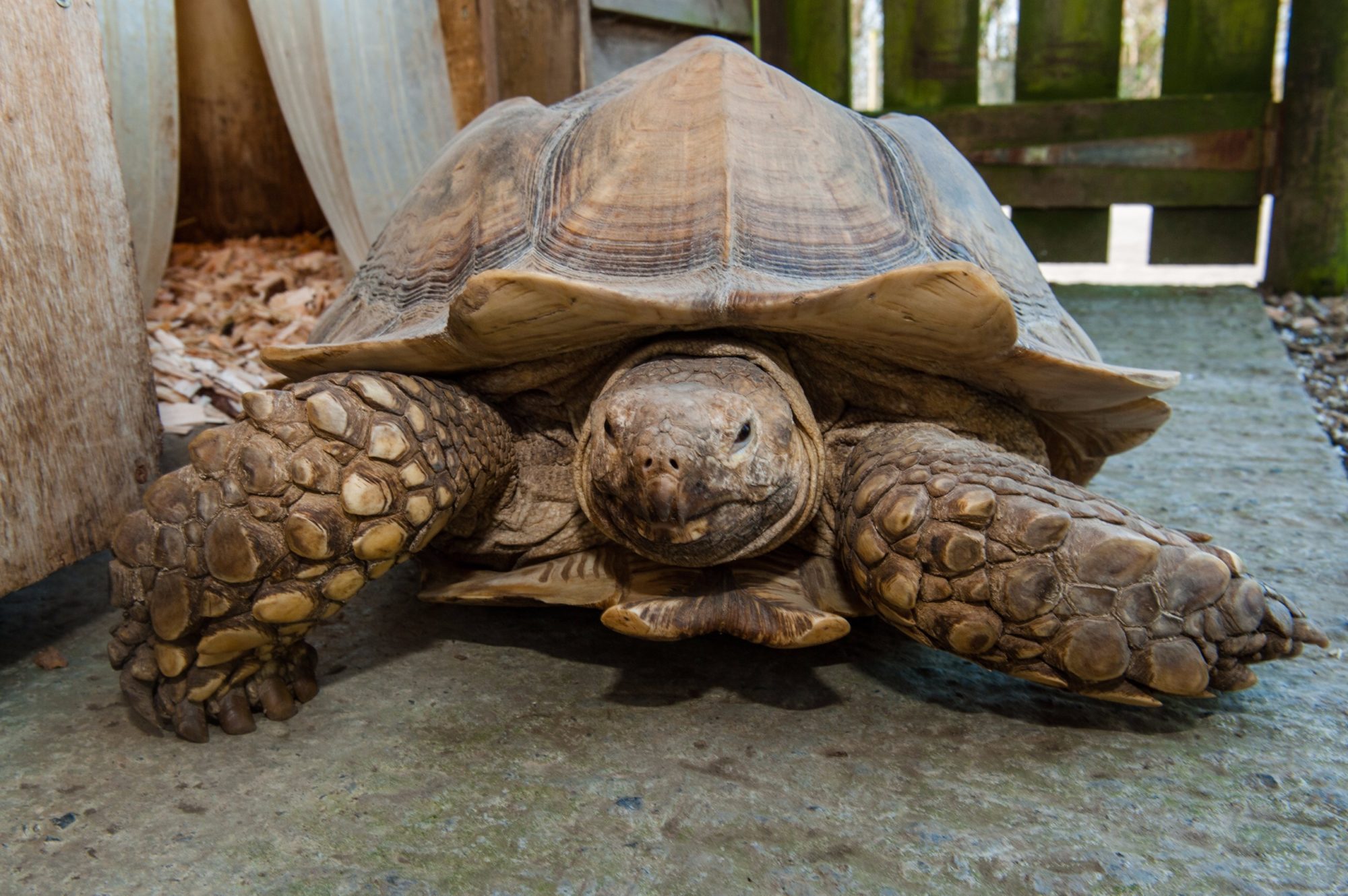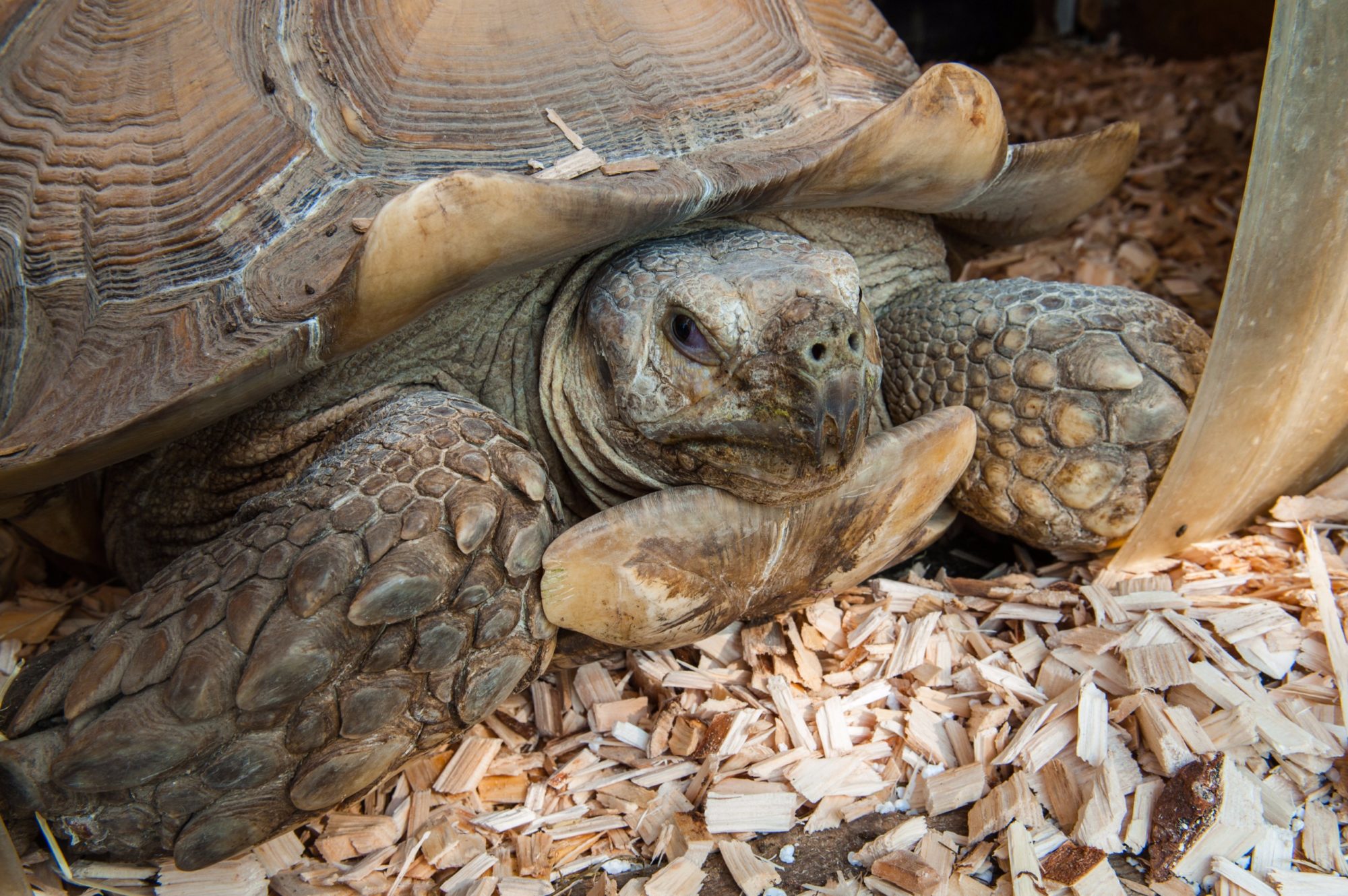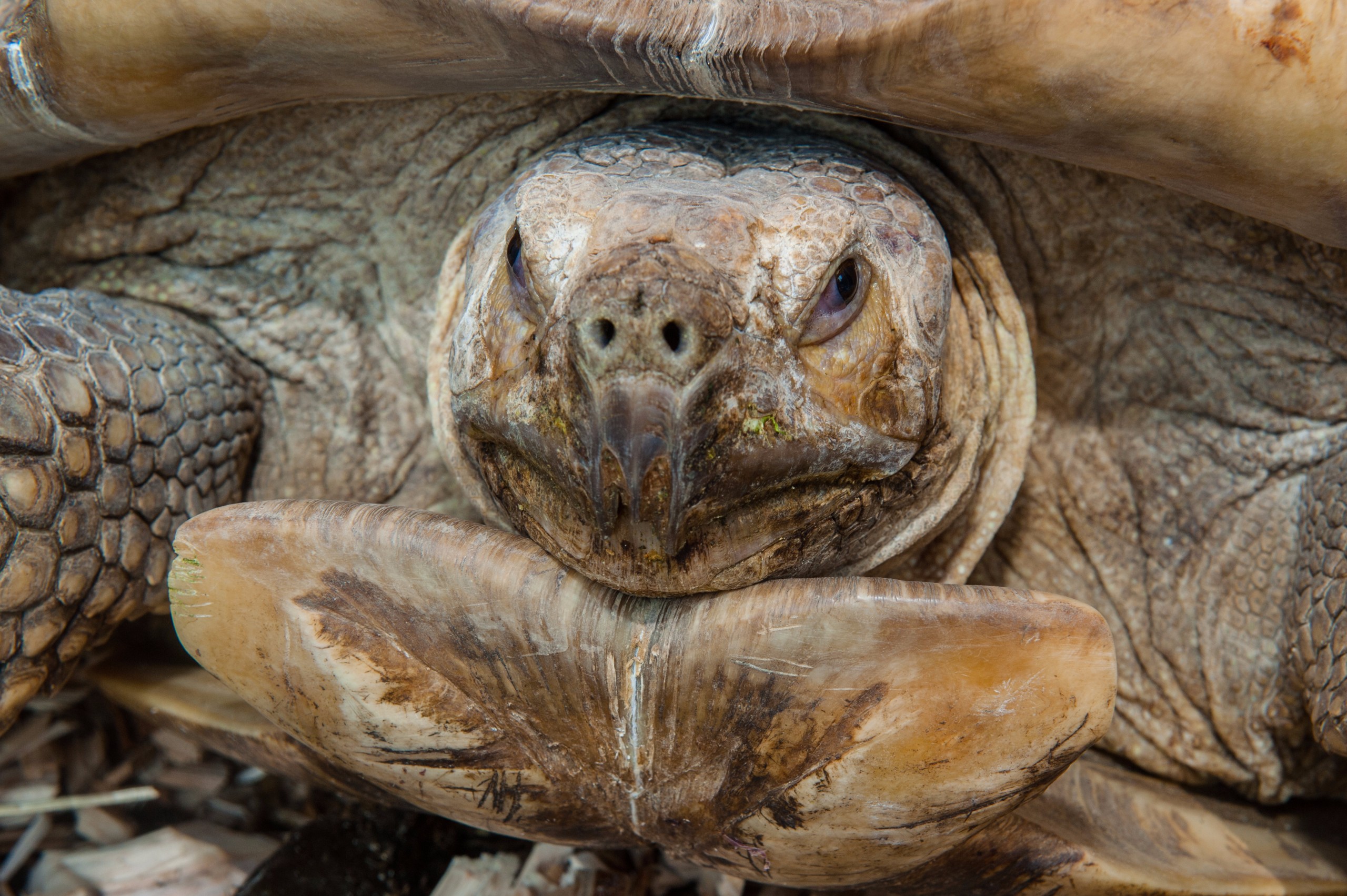
Found only in north Africa on the southern edge of the Sahara desert these prehistoric looking creatures are under threat.
These heavy weights of the tortoise world can live from 80-100 years. Size doesn’t mean they’re old – they are generally fully grown and mature by the time they’re 15 years old. They might look slow, but these tortoises can be very territorial and aggressive to each other. Males frequently display their dominance over females by ramming and often flipping each other over.
Did you know that tortoises like to dig? It’s true. They do this so they can access areas containing higher amounts of moisture. An ideal way to cool down in the scorching Saharan desert sun, sometimes even 3m underground!
Tortoise or Turtle?
In the UK ‘Tortoise’ refers to the land-dwelling animals (aka terrestrial). ‘Turtles’, therefore, live in water (aka aquatic or semi-aquatic) and even have features like webbed feet and streamlined shells to propel them through the water!
Listed as vulnerable on the IUCN red list due to the destruction of their habitats and over grazing by livestock. They also fall prey to nomadic tribes who see them as a food source. Finally, they are highly sought after for the pet trade with only the younger ones being taken. As it takes roughly 15 years for these tortoises to reach maturity it’s greatly reducing the amount of successful mating taking place in the wild.
Latin name
Centrochelys sulcata
Class
Sauropsida
Order
Testudines
Family
Testudinidae
Conservation status
Vulnerable
Impress your friends with everything you know about the African spurred tortoise
They’re herbivores, so that means they eat grasses and plants.
This is because of the ‘sticky outy’ bits (technical term), or spurs, on its hind legs.
The females can grow up to 50cm in length and weigh 60kg. The males can grow up to 80cm in length and weigh a whopping 100kg (that’s 100 bags of sugar!).