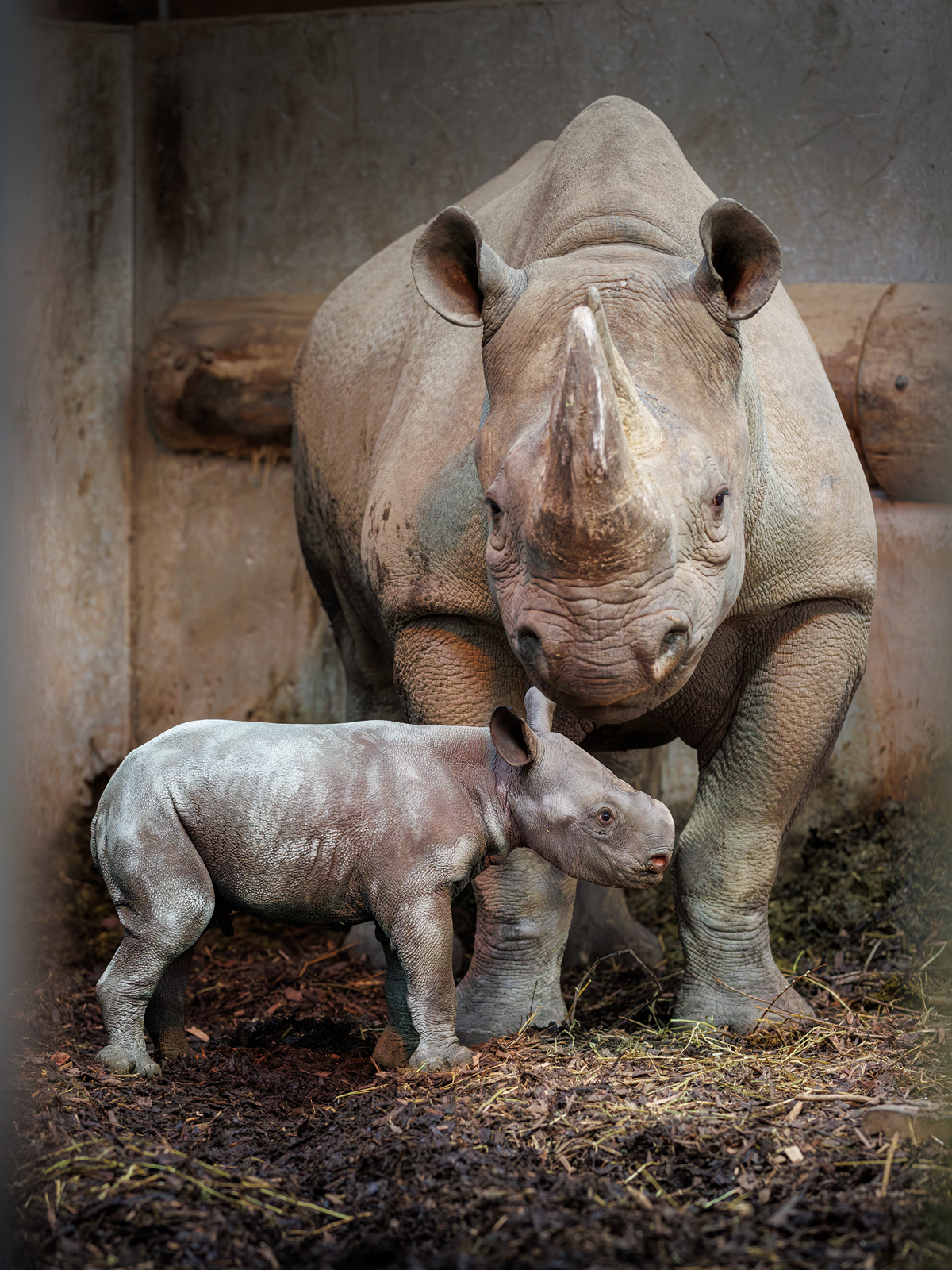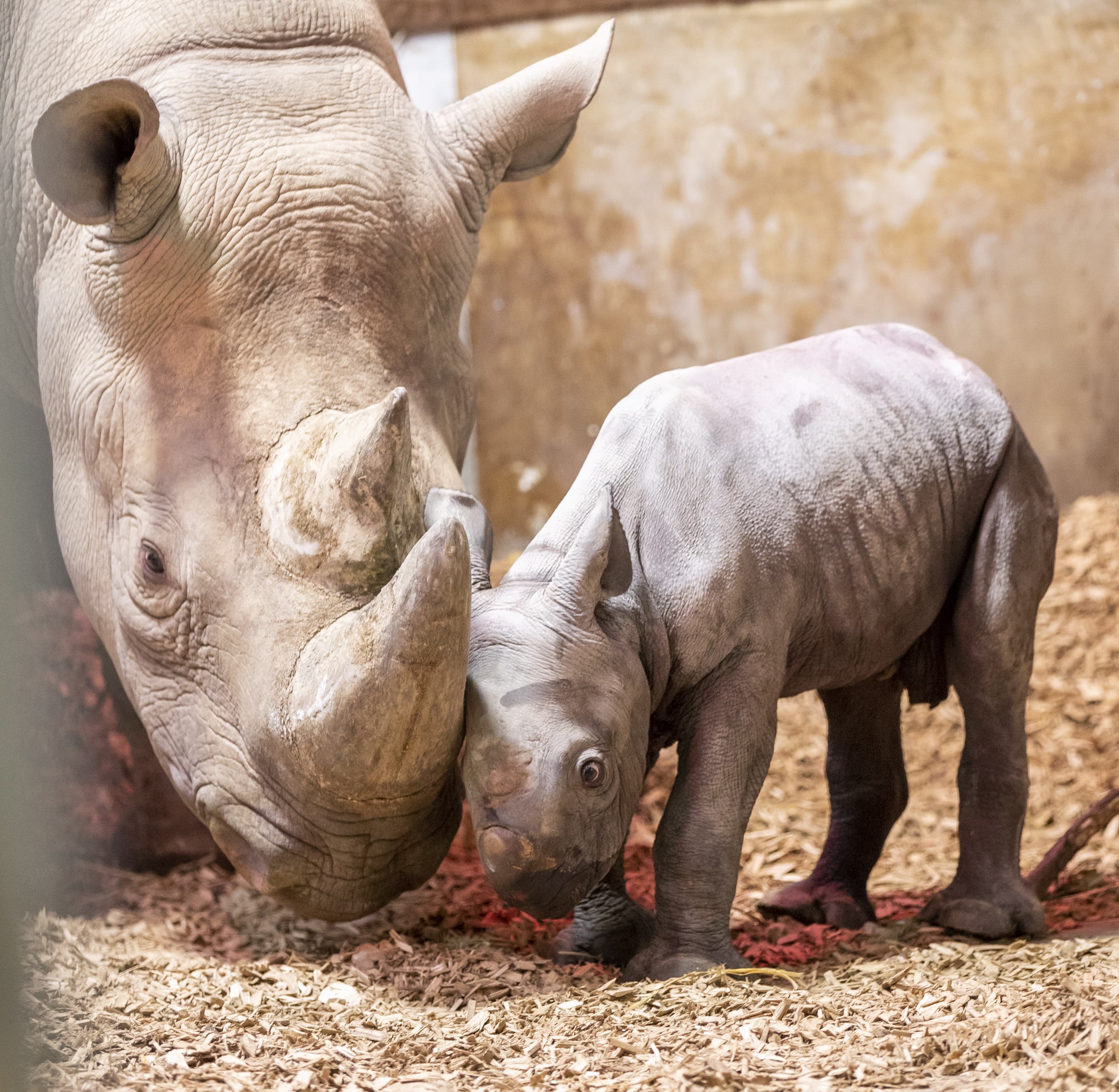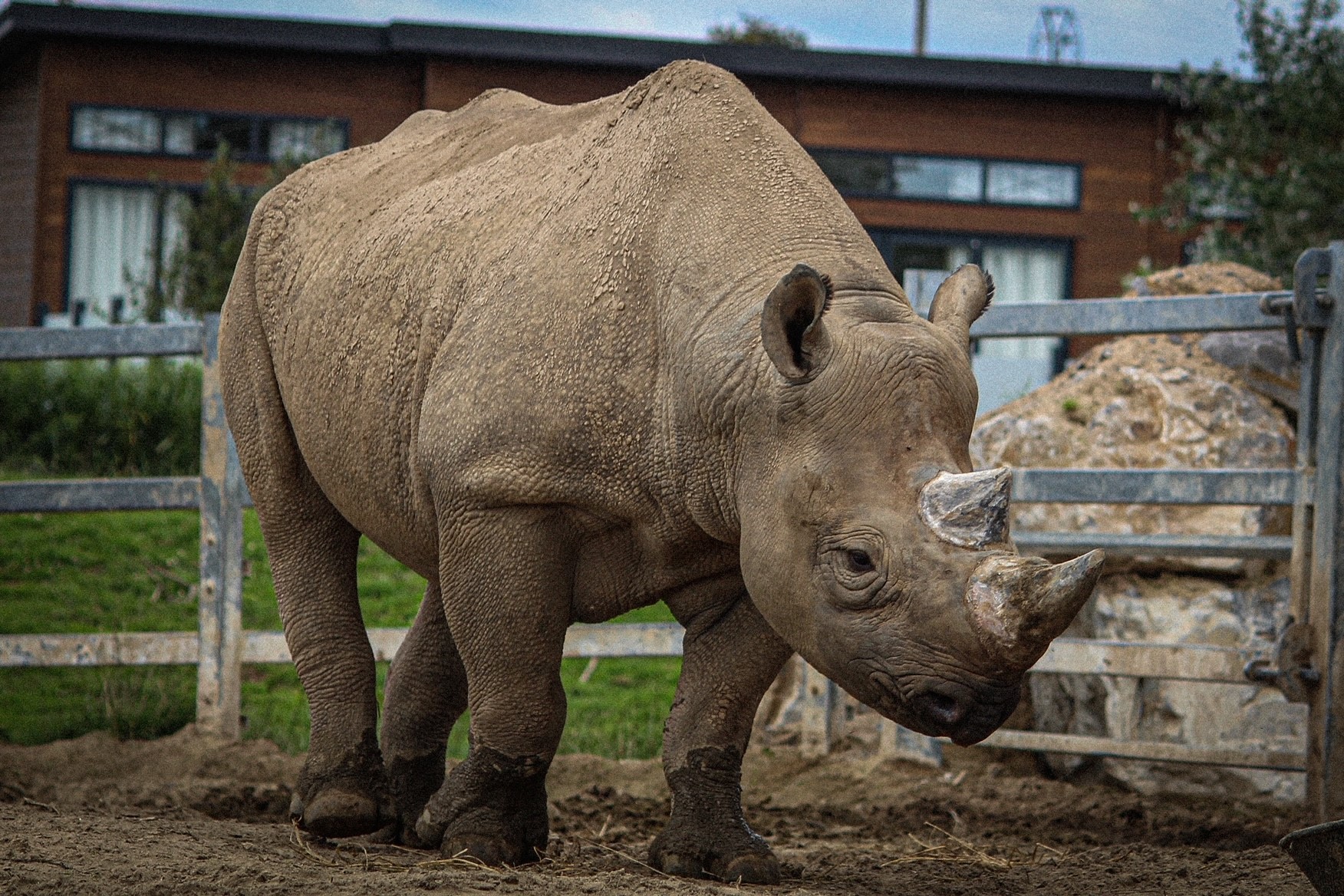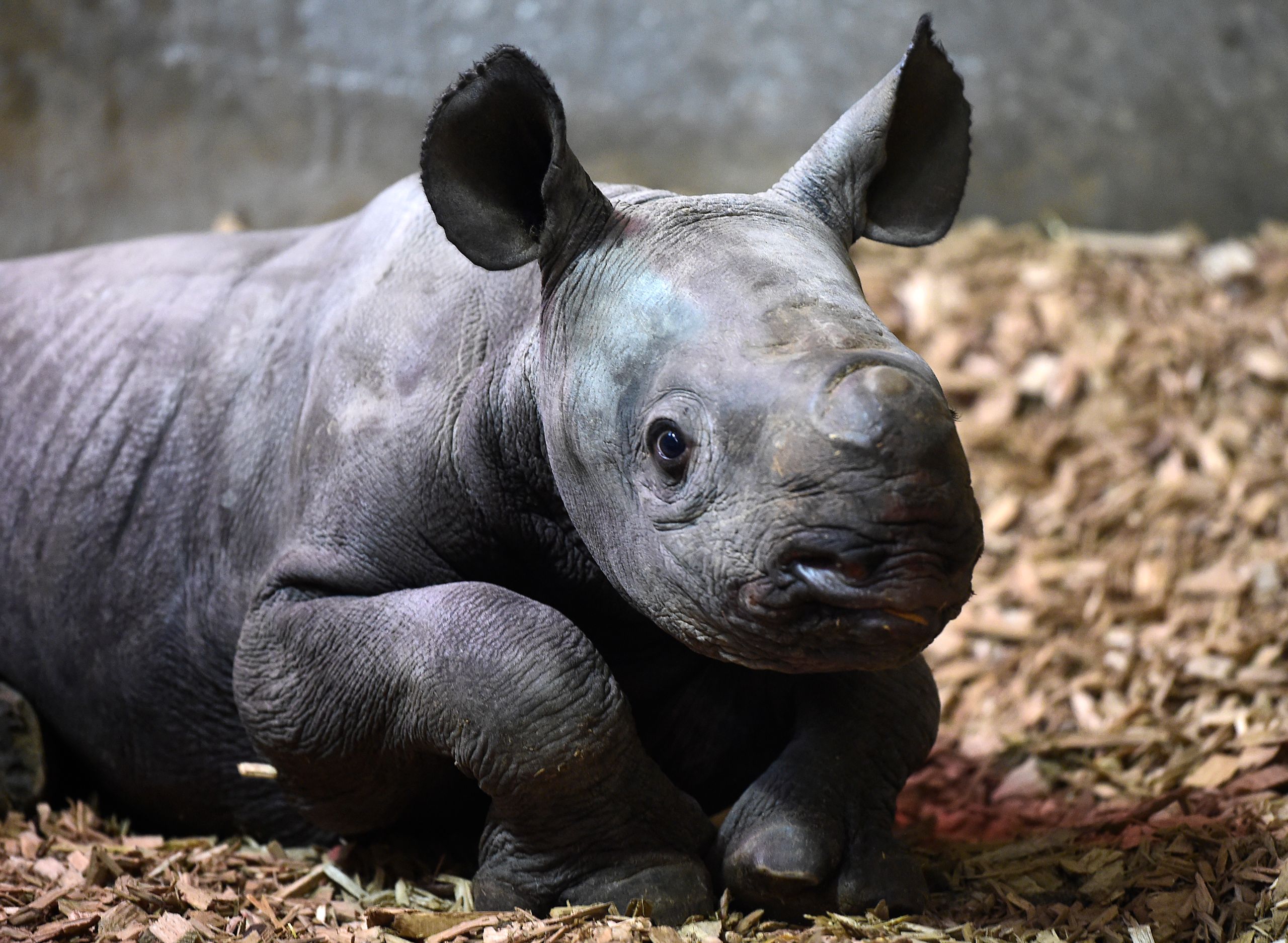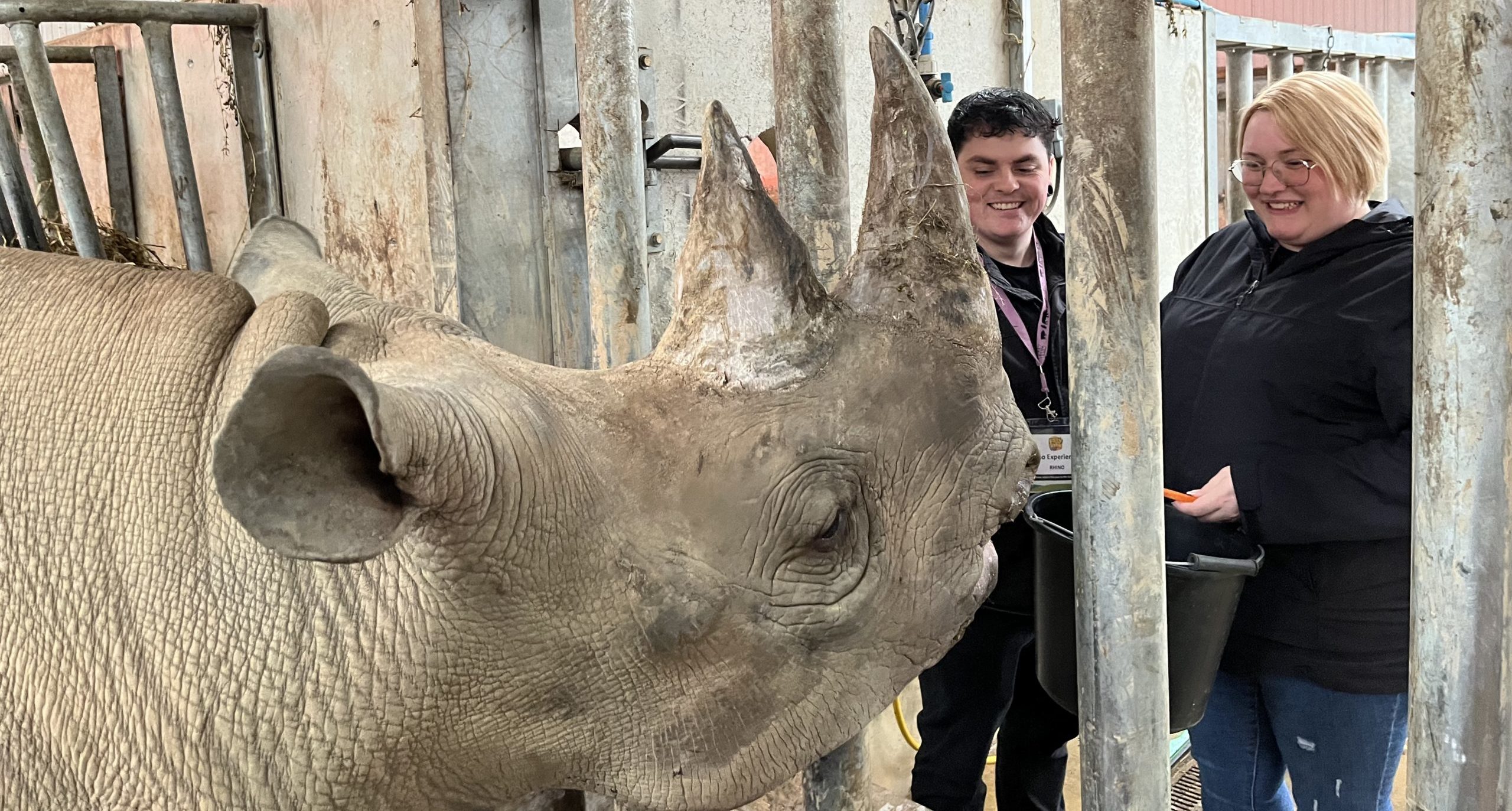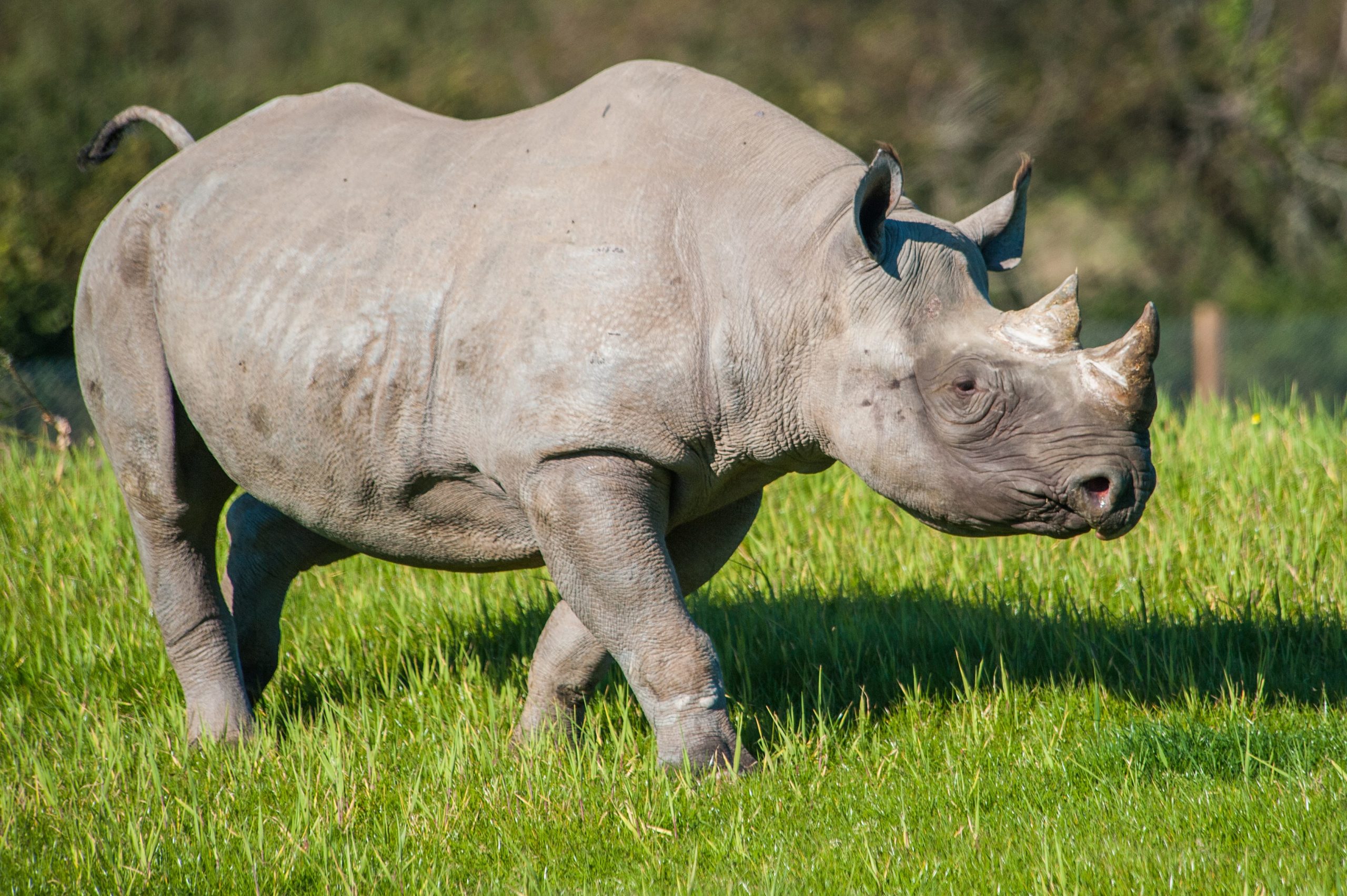
Despite their name, black rhinos aren’t actually black – they’re grey.
They can swivel their cone shaped ears to pick up on the tiniest of sounds. They also have a strong sense of smell and this is what they use most to make sense of what’s around them.
They usually live between 35 and 50 years, and most black rhinos live in East Africa, in Tanzania.
We have four black rhino at Folly Farm. They live in our Kifaru Reserve enclosure. They love rolling in the mud and charging around.
The Eastern black rhino is at serious risk of becoming extinct. The primary threat to any rhino is poaching, or being killed, for their horns. South Africa is particularly targeted with over 1000 rhinos killed annually between 2013 and 2017.
Rhino horn is used in traditional Asian medicine where it is believed to have medicinal value for a wide range of illnesses including fever or pain. Rhino horn is made of keratin, the same stuff as our fingernails or hair – so it has no medicinal value, at all.
Conservationists across the world are helping to combat the trade of rhino horn and protect the wild rhinos. At Folly Farm we help to fundraise for UK based charity, Helping Rhinos. (link to conservation partners).
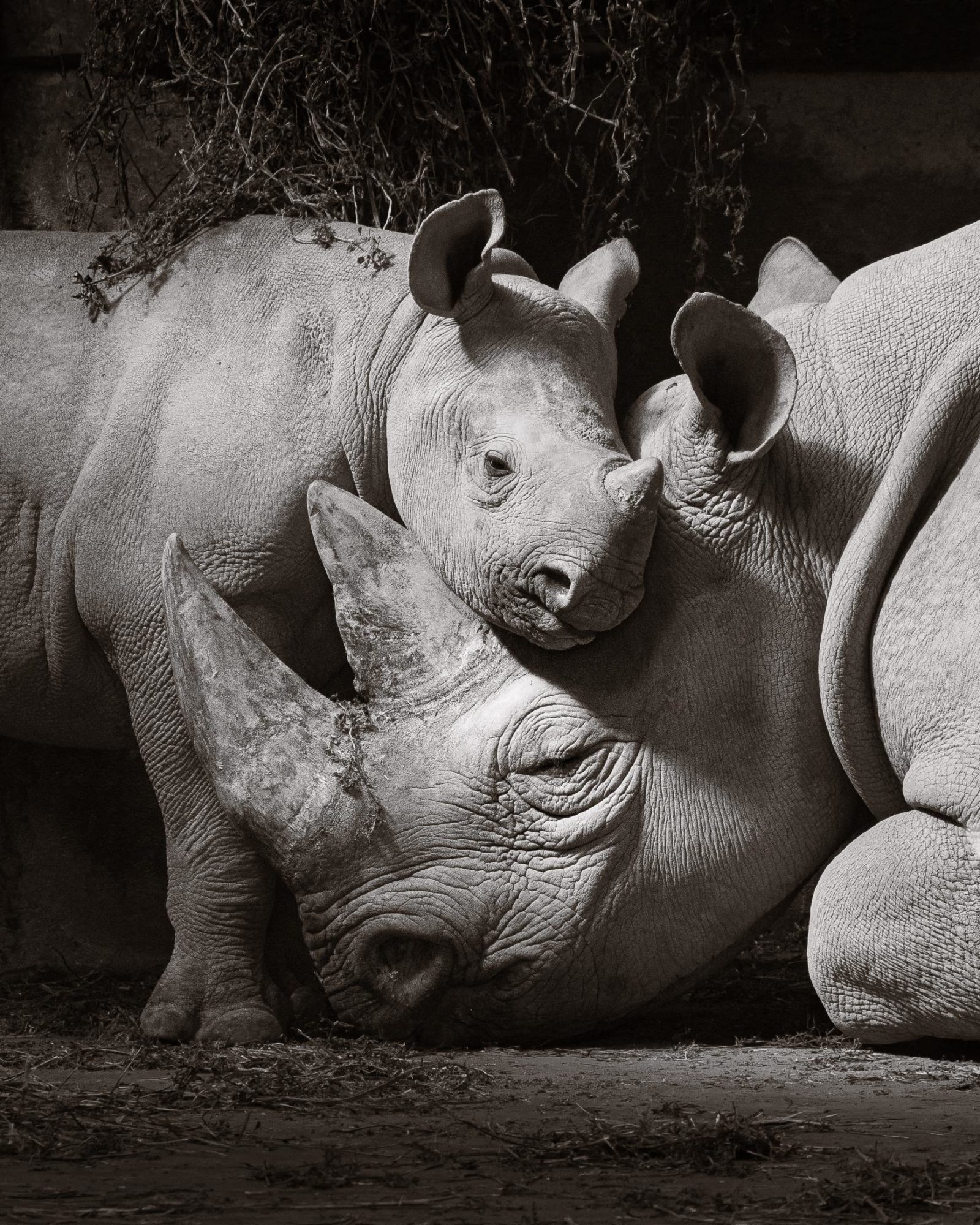
Our black rhinos are part of the European Breeding Programme. We have welcomed two precious calves to the world. The first male calf was born in January 2020, with our second born in November 2025, also a male.
How can you help?
Never purchase illegal wild animal products or body-parts when travelling abroad.
Support our conservation partner Helping Rhinos, who deliver innovative long-term conservation programmes supporting rhinos in the wild.
Latin name
Diceros bicornis
Class
Mammalia
Order
Perissodactyla
Family
Rhinocerotidae
Conservation status
Critically endangered
Impress your friends with everything you know about Rhinos!
Rhinos are herbivores (plant eaters). They eat leafy plants, branches, shoots, bushes and fruit.
Rhinos can reach speeds of up to 55kph. Black rhino can be very aggressive and will charge at anything that scares them.
An adult black rhino weighs between 800 and 1400 kilograms.
A group of rhinos is called a ‘crash’.
Not all rhinos have two horns. The black, white and Sumatran rhino has two horns. The Javan and Indian have just one horn.
The front horn is the largest at about 50cm long, but some have reached up to 140cm.
Black rhinos, white rhinos, it doesn’t matter. They’re all grey. It’s possible the word ‘white’ in white rhino was wrongly translated from the Dutch word for wide (‘wijd’), describing its mouth.
Rhinos make grunting and sniffing noises. Baby rhinos make squealing and screeching sounds.
There are five types of rhino. They are listed below in order of size, starting with the biggest:
Three of these are critically endangered – the black rhino, the Sumatran and the Javan.
Black rhinos live in grassland, scrubland and bushes.
The gestation period, or pregnancy, of a rhino is 15 to 16 months.
A rhino has one baby, or calf.
A midden is a pile of rhino poo. Rhinos choose a spot and always poo there, much like a toilet. It makes our rhino keepers’ job much easier.
Yes! You can adopt a rhino with Folly Farm today!