These slow moving, peaceful creatures can be found in the forests of South America.
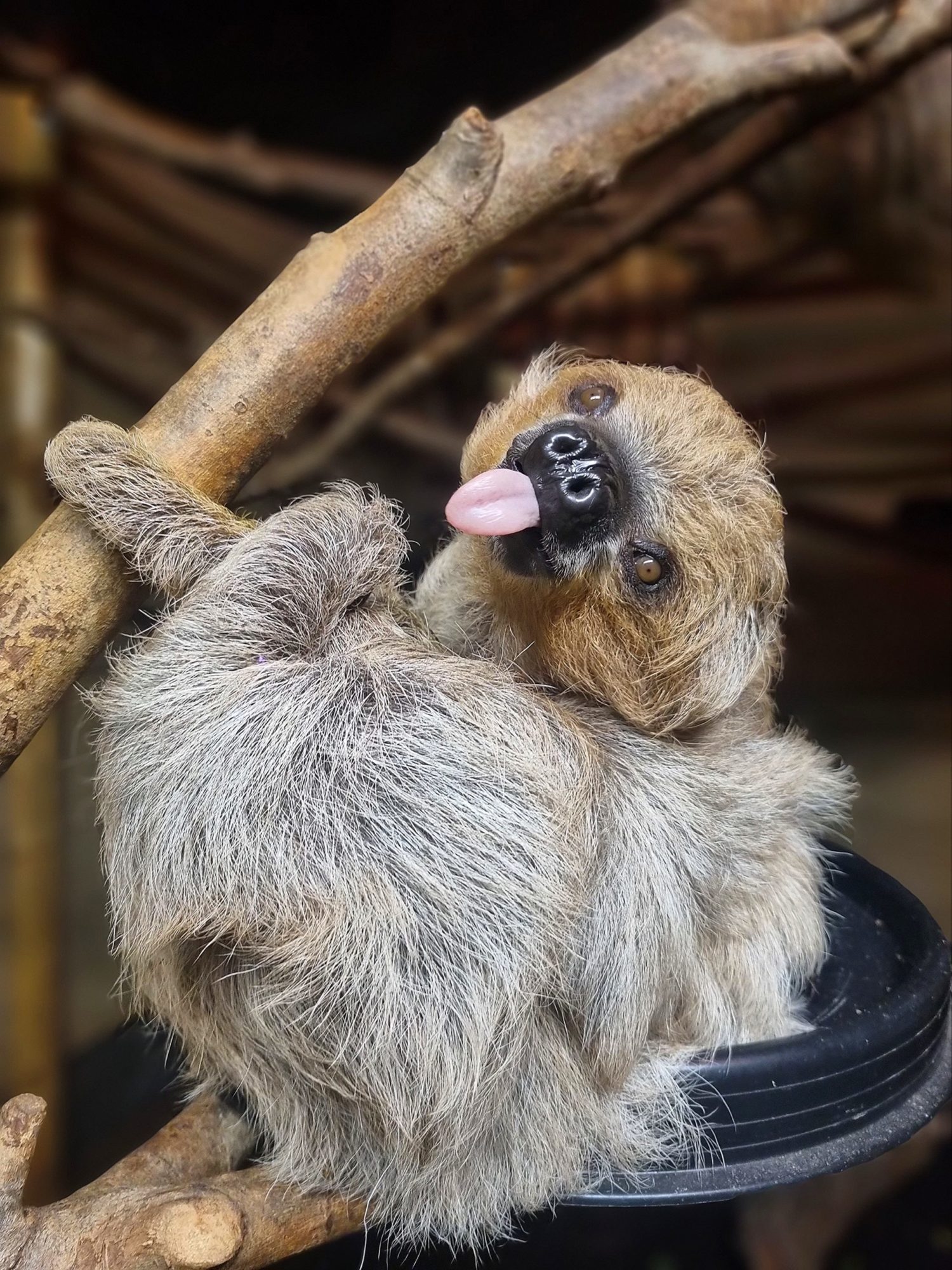
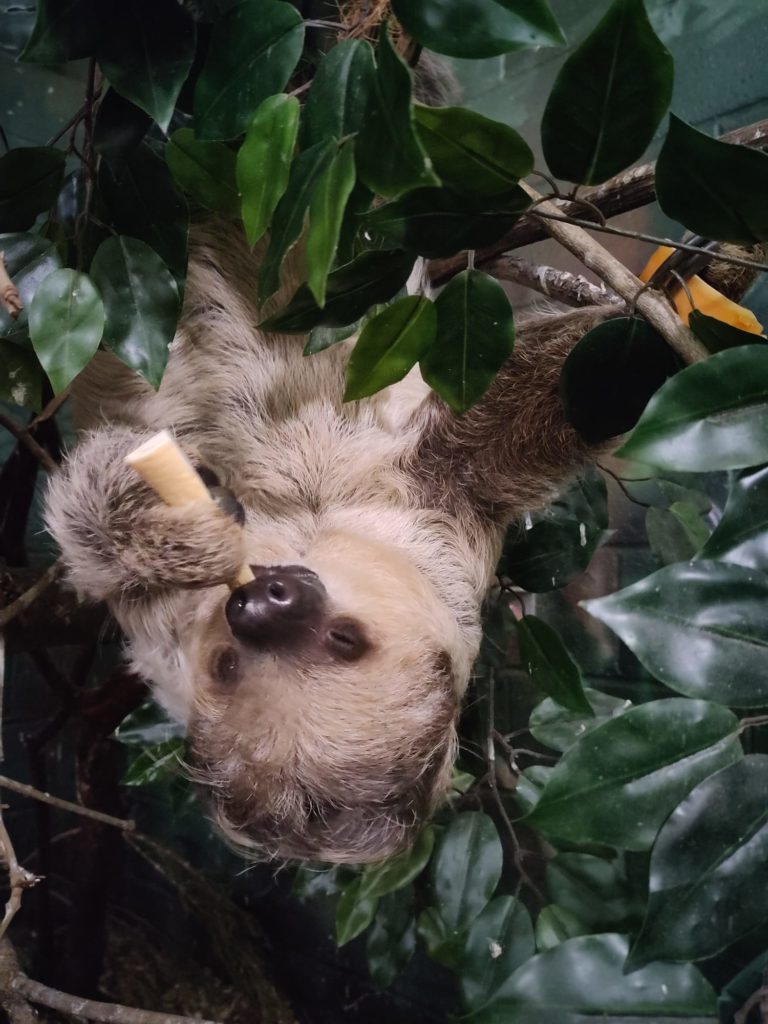
We’re incredibly lucky to have four sloths at our zoo within the Tropical Trails exhibit. Our pair of breeding sloths, Button and Nova, have joined us as part an EAZA European breeding programme. Our elderly pair of sloths, Tuppee and Lightcap, can be found in their specially adapted retirement home near the fruit bats, away from the more active youngsters, where they live happily, undisturbed in their old age. Partial to a nice bit of asparagus every now and again you’ll more than likely spot Tuppee curled in a ball and catching ‘forty winks!’.
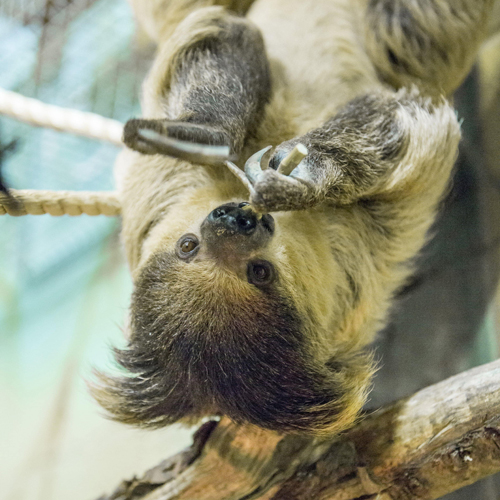
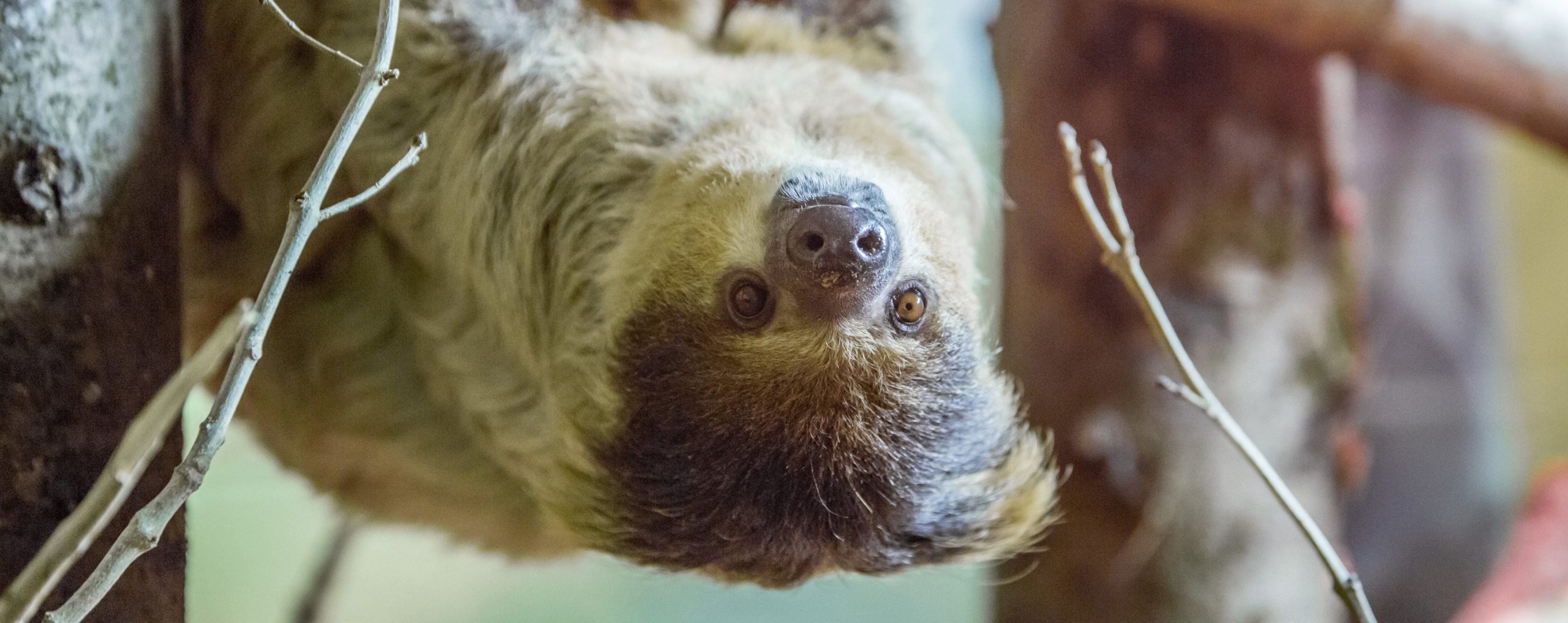
Two-toed sloths get their name from the two large claws on their forelimbs. These can grow up to 7.5cm in length. The claws have a super strong grip and some sloth have been known to remain hanging from the trees long after death!
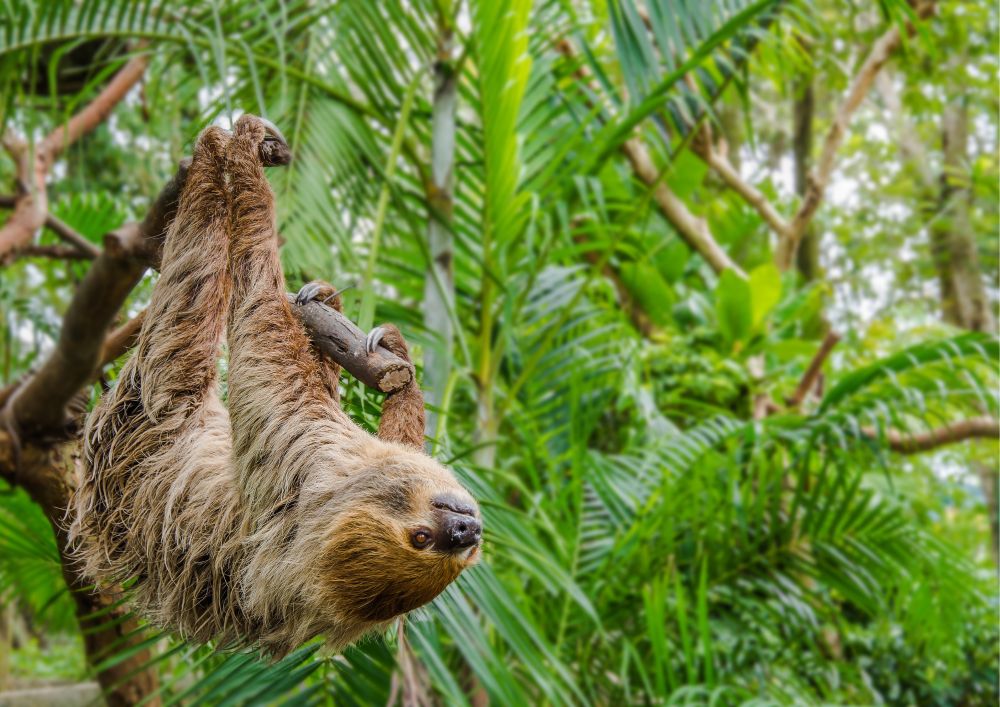
They are unique in the animal world in that they do spend most of their life upside down. They eat, sleep and even give birth upside down and because of this, their internal organs have actually re-positioned over a period of time.
Conservation
Sloths might move slowly, but their race towards extinction is happening fast. Although listed as ‘least concern’ by the IUCN red list, there is a real decrease in numbers in the wild. This is mainly down the destruction of their natural forest habitat. It’s actually quite hard to get a real idea of numbers in the wild as they can be quite difficult to find and research in dense rainforest. But what we do know is that sloths rely on the forest and when their home is cut down to make way for development or crops, the sloths disappear.
How can you help sloths?
Purchase sustainable wood products that are FSC certified, this ensures that the wood has been sourced from a certified and therefore more sustainable location.
Latin name
Choloepus didactylus
Class
Mammalia
Order
Pilosa
Family
Megalonychidae
Conservation status
Least concern
Impress your friends with everything you know about sloths!
Sloths are classed as herbivores. Their diet consists mainly of leaves but occasionally they will eat fruit and they have been known to eat bird’s eggs, lizards and insects. In the wild, they live in the rainforest so have access to a wide range of trees and plant species. At Folly Farm, our sloths eat a lot of vegetables and are particularly fond of asparagus and baby corn!
Yes! Folly Farm offers sloth adoption – the perfect gift for any lover of sloths.
They do. They include anacondas, harpy eagles, ocelots and jaguars.
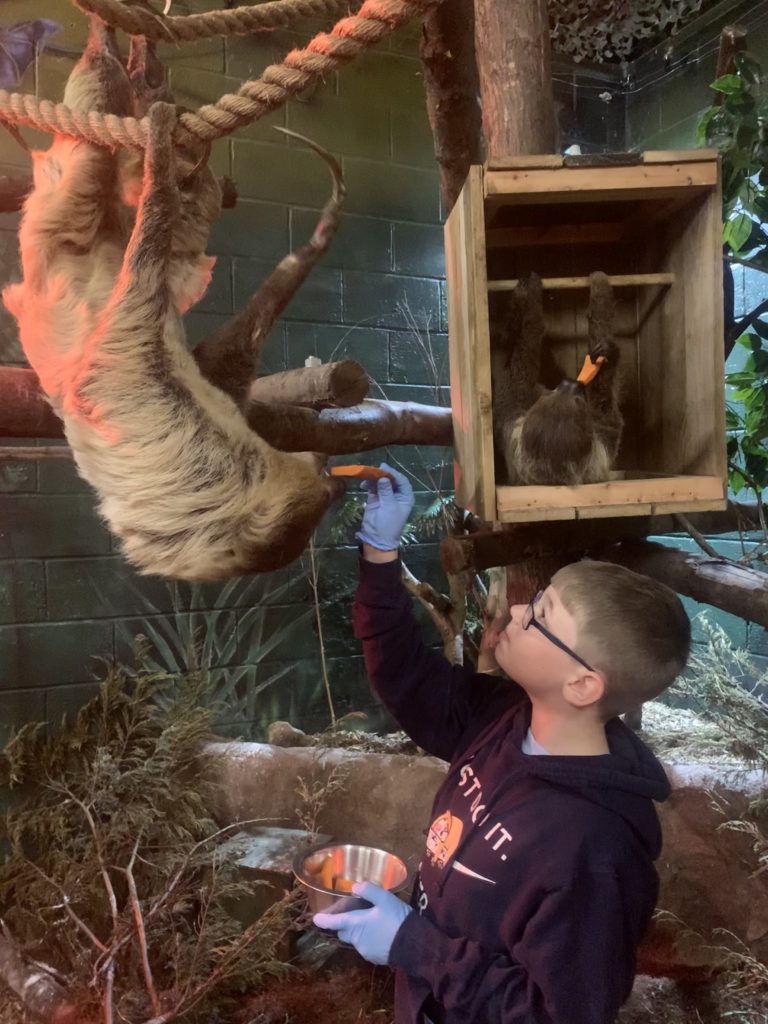
Yes again! You can meet the sloths and feed the sloths on our new sloth experience in the new Sloth Forest enclosure in our Tropical Trails exhibit.
It’s due to their low energy diet. They try to save what little energy they have. They do this by moving very slowly and deliberately. And by sleeping up to 15 hours a day!
In a tree, they move at about three metres per minute, but on the ground, it’s a little slower at only two metres per minute. They’re actually quite dangerous because their claws are razor sharp but they’re not likely to catch you.
How much does it cost to feed a sloth?
You can feed our sloths on our sloth experience. It costs £85 per person and as well as the chance to feed our sloths (subject to them being bothered!) you can ask our keepers everything you’ve ever wanted to know about sloths. Plus you’ll receive a sloth cuddly toy to remember your sloth feeding experience!